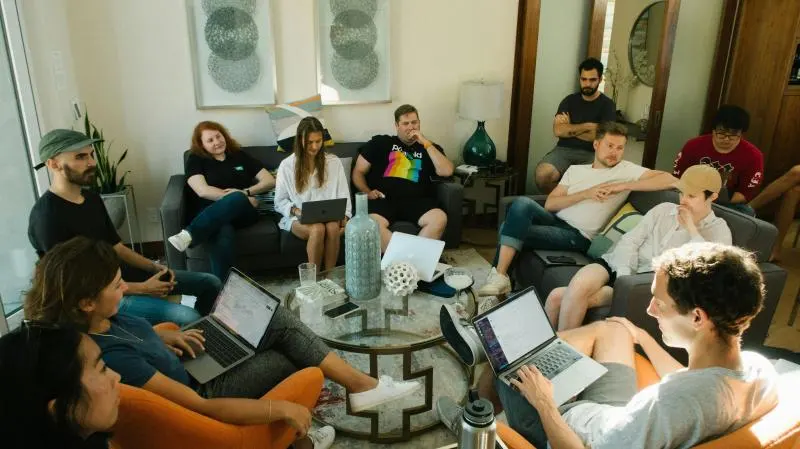
How to Talk About Psilocybin Decriminalization with Your Community
This guide provides conversation starters, ways to address common concerns, and strategies for sharing research in accessible ways.
Skip to main content

Decriminalize Psilocybin Michigan
P.O. Box 1035
Ann Arbor, Michigan
Change happens when people have access to accurate information and the tools to take action. Browse our collection of research, educational materials, and advocacy resources to become a more informed and effective voice for decriminalization in your community.
Change happens when people have access to accurate information and the tools to take action. Browse our collection of research, educational materials, and advocacy resources to become a more informed and effective voice for decriminalization in your community.
Decriminalization means making enforcement of psilocybin laws the lowest priority for law enforcement—ending arrests, prosecution, and incarceration for personal possession and use. It's different from legalization in important ways:
Decriminalization:
Why Decriminalization? We believe people should have the freedom to grow, gather, and gift psilocybin mushrooms without fear of arrest. This approach respects personal freedom, prevents corporate commodification, and allows communities to reconnect with natural healing practices on their own terms.
Decriminalization means making enforcement of psilocybin laws the lowest priority for law enforcement—ending arrests, prosecution, and incarceration for personal possession and use. It's different from legalization in important ways:
Decriminalization:
Why Decriminalization? We believe people should have the freedom to grow, gather, and gift psilocybin mushrooms without fear of arrest. This approach respects personal freedom, prevents corporate commodification, and allows communities to reconnect with natural healing practices on their own terms.
Education is the foundation of our movement. Explore research studies, policy guides, educational materials, and advocacy tools to deepen your understanding of psilocybin and share knowledge with others in your community.
This guide provides conversation starters, ways to address common concerns, and strategies for sharing research in accessible ways.

This guide walks you through identifying key decision-makers in your community, requesting meetings, preparing effective talking points, and following up to build lasting relationships.
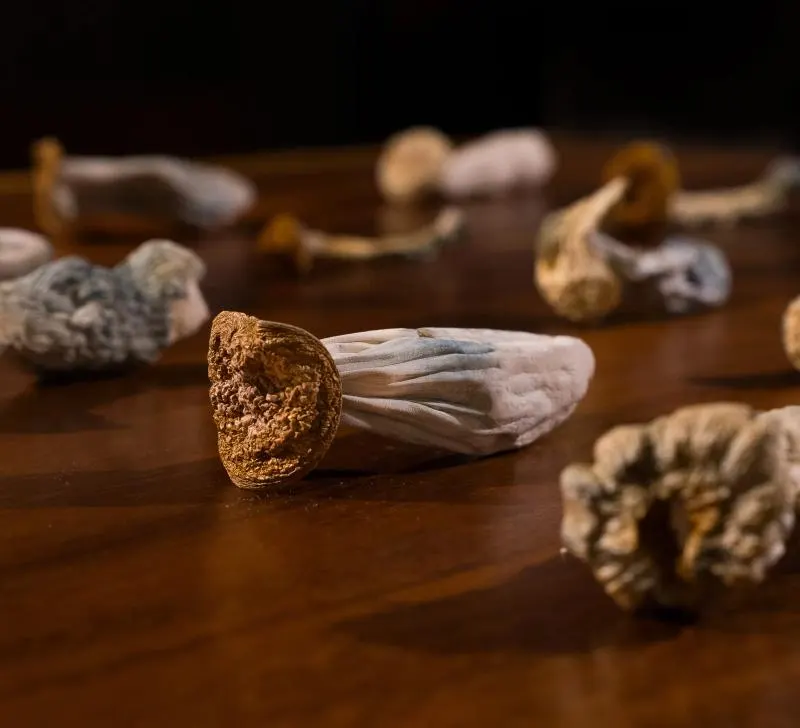
As Michigan moves toward decriminalization, understanding what psilocybin mushrooms are, how they work, and why access matters has never been more important.
Stay up to date on pending and passed decriminalization, funded research, and legalization
Check out the key and explore the filters to see progress based on region or common goal
Texas

Passed legislation

Funding approved

Medical research
Overview
Texas has invested in psychedelic research, particularly ibogaine. In 2021, HB 1802 became law, directing the Department of State Health Services to study MDMA, psilocybin, and ketamine for PTSD treatment. In 2025, Governor Abbott signed SB 2308/HB 3717, establishing a grant program to support FDA-aligned drug development of ibogaine for opioid use disorder and other conditions. Additional 2025 bills proposed studies on psychedelic therapies through partnerships with Baylor College of Medicine and UT Austin's Center for Psychedelic Research and Therapy.
Maryland
Passed legislation
Funding approved
Medical research
Overview
Maryland has pursued psychedelic reform through research funding and task forces. In 2022, SB 709 created the Post-Traumatic Stress Disorder Alternative Therapies Fund to provide cost-free access to psilocybin, MDMA, and ketamine for veterans with PTSD and traumatic brain injury—the bill passed unanimously and took effect without the governor's signature. In 2024, the governor approved HB 548, establishing a Task Force on Responsible Use of Natural Psychedelic Substances to study existing laws and recommend changes to create broad, equitable access to psychedelics, with findings due by July 2025.
Illinois

Pending legislation
Overview
Illinois legislators have repeatedly introduced bills to expand access to psilocybin. For the third consecutive year in 2025, Representative LaShawn Ford filed HB 1143, the Compassionate Use and Research of Entheogens Act, which would establish an Illinois Psilocybin Advisory Board and create a licensing framework for psilocybin services. Also in 2025, HB 2992 proposed a pilot program for regulated psilocybin-assisted therapy. At the local level, Evanston council member Devon Reid announced intentions in 2022 to sponsor decriminalization legislation, though Chicago's 2020 resolution expressing support for entheogenic plants was heard but not passed.
Nevada
Passed legislation
Medical research
Pending legislation
Overview
Nevada established a framework for psychedelic research through 2023's SB 242, which created procedures for research facilities to conduct studies involving psilocybin and MDMA. The bill was scaled back from its original proposal to decriminalize psilocybin possession but passed unanimously in the Assembly and was signed by the governor. In 2025, SJR 10 urged Congress to boost federal funding for psychedelic research and reschedule various substances, while AB 378 proposed an Alternative Therapy Pilot Program to administer psychedelics to veterans and first responders with mental health conditions.
Massachusetts
Pending legislation

Failed legislation

Reduced penalty
Overview
Massachusetts has seen significant local momentum for psychedelic reform, with Somerville, Cambridge, Northampton, Easthampton, and Salem all passing resolutions designating entheogenic plant enforcement as their lowest priority. In 2024, advocates qualified Question 4 for the statewide ballot—an initiative that would have established regulated access to natural psychedelics including psilocybin, psilocin, mescaline, DMT, and ibogaine for adults 21 and older through licensed service centers. The measure did not pass in the November 2024 election. Despite the ballot setback, the 2025 legislative session brought a surge of psychedelic-related bills, including proposals to create therapeutic psilocybin centers (H 2532), establish pilot programs for psychedelic-based mental health treatments (HD 4509), decriminalize personal possession (SD 870), and allow veterans and those with qualifying conditions to legally possess small amounts of psilocybin (H 2506). Several bills draw from regulatory models developed in other states, while others focus specifically on breakthrough therapies or harm reduction approaches.
Connecticut
Passed legislation
Funding approved
Medical research
Pending legislation
Overview
Connecticut has pursued psychedelic reform through both research funding and legislative proposals. In 2021, the governor signed legislation directing the Department of Mental Health and Addiction Services to convene a working group studying psilocybin's health benefits. The following year, the state budget specifically earmarked funds for psychedelic-assisted therapy pilot programs offering psilocybin and MDMA treatments to veterans, retired first responders, and direct care health workers at FDA-approved treatment sites. The 2025 legislative session brought multiple bills, including HB 5456 to allow trained facilitators to offer psilocybin-assisted therapy, and HB 7065 to decriminalize possession of less than half an ounce of psilocybin.
New Mexico

Legalization
Passed legislation
Overview
New Mexico became the third state to establish a legal psilocybin access system when Governor Michelle Lujan Grisham signed SB 219, the Medical Psilocybin Act, into law in April 2025. The law removes psilocybin from the state's Controlled Substances Act and creates a psilocybin advisory board, treatment equity fund, and research fund to support a state-funded medical program for patients with qualifying conditions by December 2027. A 2005 Court of Appeals decision (State v. Pratt) had previously established that growing mushrooms alone does not constitute manufacturing a controlled substance.
Pennsylvania
Failed legislation
Overview
Pennsylvania's psychedelic reform efforts have focused on research. The 2021 Public Health Benefits of Psilocybin Act (HB 1959) would have authorized clinical study of psilocybin-assisted therapy for PTSD, traumatic brain injury, and mental health conditions, prioritizing veterans and first responders. A revised version (HB 2421) was introduced in 2022 but was not reintroduced in the 2023-24 session and is presumed dead.
Iowa
Pending legislation

Indigenous/Religious Protections
Overview
Iowa legislators have introduced multiple psychedelic reform bills in 2025. HF 351 would remove psilocybin and psilocyn from Schedule I, while HF 978 would create a system for using psilocybin to treat PTSD. Notably, HF 609 would clarify that psychedelic use in religious or spiritual ceremonies is protected as exercise of religion. A rescheduling trigger bill (SSB 1177) would reschedule FDA-approved psilocybin. Representative Jeff Shipley has been a consistent advocate, having introduced related bills dating back to 2019.
Minnesota
Passed legislation
Reduced penalty
Indigenous/Religious Protections
Pending legislation
Overview
Minnesota has taken a methodical approach to psychedelic reform, beginning with the 2023 establishment of a state Psychedelic Medicine Task Force signed into law by Governor Walz. The task force—composed of 23 members surveying scientific literature and comparing psychedelic medicines to conventional treatments—delivered an initial report in February 2024 and recommended that legislators seriously consider decriminalizing psilocybin for personal use and establishing a state-funded regulated therapy program for patients with qualifying conditions. That same year, Minneapolis became the first city in the Upper Midwest to deprioritize natural psychedelics when Mayor Jacob Frey issued an Executive Order designating enforcement of laws related to psilocybin, ayahuasca, mescaline, and iboga as the city's lowest priority. The order notably acknowledges Indigenous practices protected under the American Indian Religious Freedom Act and the Religious Freedom Restoration Act. Building on the task force's recommendations, the 2025 legislative session saw the introduction of HF 2699, which would eliminate criminal and civil penalties for personal possession and use of psilocybin by adults 21 and older, permit home cultivation, and establish protections against eviction or custody disputes based on psilocybin use.
Arizona
Passed legislation
Funding approved
Overview
Arizona's 2025 legislative session produced significant progress on psychedelic reform. The state legislature approved a rescheduling trigger bill (SB 1555), setting the stage for expedited rollout of psilocybin therapy once federal approval occurs. Additionally, $5 million was earmarked in Arizona's FY2026 budget to fund clinical studies on ibogaine's potential for treating neurological diseases including traumatic brain injury and PTSD. A previous attempt to create a regulated psilocybin services framework (SB 1570) was vetoed by Governor Hobbs in 2024.
Hawaii
Pending legislation
Failed legislation
Overview
Hawaii has seen multiple legislative attempts to advance psychedelic therapy access. In 2025, SB 1042 proposed a two-year Mental Health Emerging Therapies Pilot Program to fund Phase 3 clinical trials for treatments holding FDA Breakthrough Therapy Designations, including psychedelics. The bill passed the House with substantial amendments but faced Senate disagreement. Previous efforts include 2022's SB 3160, which was unanimously approved by the Senate to create a therapeutic psilocybin working group, and various bills proposing to remove psilocybin from Schedule I and establish treatment centers.
Maine
Pending legislation
Failed legislation
Overview
Maine has come close to passing psilocybin therapy legislation. In 2024, LD 1914—the Maine Psilocybin Health Access Act, modeled after Oregon's program—passed the House and would allow licensed service centers to administer psilocybin under facilitator supervision while decriminalizing personal possession for adults 21 and older. The Senate carried the bill over to special session. In 2025, LD 1034 was introduced to decriminalize personal possession of one ounce or less of psilocybin, though it will not be deliberated in the current session. A 2022 Senate-passed psilocybin services bill stalled in the House.
Florida
Passed legislation
Failed legislation
Overview
Florida's psychedelic policy landscape has seen both setbacks and continued advocacy. In 2025, the state's Farm Bill (SB 700) included a provision making it a misdemeanor to transport, sell, or give away spores or materials containing psilocybin—a step backward for reform advocates. Previous efforts to research alternative therapies including MDMA, psilocybin, and ketamine for conditions like PTSD and depression (SB 348 and HB 193) died in committee in 2022. A 2021 bill to decriminalize personal possession also failed to advance.
Missouri
Failed legislation
Overview
Missouri legislators have made multiple attempts to advance psychedelic therapy access, particularly for veterans. In 2025, HB 829 proposed a state-funded psilocybin therapy program for veterans but was dropped from the calendar before the session ended. Related bills (HB 951 and SB 90) sought to expand legal protections for psilocybin therapy program participants. Previous efforts include 2023's HB 1154, which passed the House Veterans Committee and would require clinical trials on psilocybin for PTSD and depression, and 2022's HB 2850 to legalize natural medicines for medical use.
Washington
Passed legislation
Reduced penalty
Pending legislation
Medical research
Overview
Washington's drug policy landscape shifted dramatically in 2021 when the State Supreme Court's State v. Blake decision briefly decriminalized drug possession by declaring felony penalties unconstitutional. The legislature responded with SB 5476, which reduced possession penalties from felonies to misdemeanors and encouraged diversion to treatment for first- and second-time offenders—though these provisions were set to expire after two years. At the local level, Seattle, Port Townsend, Jefferson County, and Olympia have all passed measures designating entheogenic plant enforcement as a low priority. In 2023, Governor Inslee signed a bill establishing a psilocybin pilot program specifically for veterans and first responders. The 2025 legislative session saw multiple bills introduced, including SB 5201 to create regulated psilocybin-assisted therapy services, HB 1281 for an expanded veterans and first responders pilot, and SB 5204 to fund ibogaine research through the University of Washington. Notably, legislators have acknowledged the cost barriers that have limited access in Oregon and Colorado's programs and are working to address affordability and equity from the outset.
Utah
Passed legislation
Medical research
Pending legislation
Overview
Utah has created a pilot program for psychedelic therapy. In 2024, SB 266 became law, establishing a pilot program for Intermountain Health and University of Utah Health to offer MDMA and psilocybin treatments. The 2022 Mental Illness Psychotherapy Drug Task Force was signed into law to provide evidence-based recommendations on psychotherapy drugs. In 2025, SB 248 was introduced as a rescheduling trigger bill that would also allow healthcare providers to develop psilocybin and MDMA treatments for patients under their supervision.
New Jersey
Passed legislation
Reduced penalty
Pending legislation
Overview
New Jersey reduced penalties for psilocybin possession in 2021 when SB 3256 passed, making possession of one ounce or less a disorderly persons offense punishable by up to six months imprisonment and a $1,000 fine—down from a third-degree crime carrying 3-5 years and up to $35,000 in fines. In 2024, SB 2283 was approved by committee and would create a regulated facilitated access model for psilocybin.
North Carolina
Pending legislation
Failed legislation
Overview
North Carolina legislators have focused on research-oriented psychedelic reform. In 2025, SB 568 proposed a mental health and psychedelic medicine task force to consider implementation barriers and recommend licensing requirements ahead of potential FDA approval. A 2023 bill (HB 727) would have established a $5 million Breakthrough Therapies Research Grant Fund for MDMA and psilocybin research focused on veterans, first responders, domestic violence victims, and those with anxiety or depression.
Ohio
Failed legislation
Overview
A 2020 bill (SB 3) that would have reduced drug possession penalties from felonies to misdemeanors and diverted offenders to treatment instead of prison was never brought up for a final floor vote.
New York
Pending legislation
Failed legislation
Overview
New York's 2025 legislative session saw numerous psychedelic reform bills introduced. SB 495 would create a state-supervised program for licensed facilitators to provide psilocybin-assisted therapy. HB 628 would legalize adult possession of DMT, psilocybin, mescaline, ibogaine, and psilocin. S 1801 would establish a psilocybin therapy pilot for veterans and first responders. A 3775 would allow medical psilocybin use in clinical settings and establish a $5 million grant program for veterans and low-income individuals. Multiple bills also address ibogaine research for addiction treatment. Previous efforts include a 2021 bill to establish a public psychedelic research institute and various decriminalization proposals.
Rhode Island
Pending legislation
Overview
Rhode Island legislators have introduced psilocybin reform bills in multiple sessions. In 2025, HB 5186 would legalize psilocybin for personal use and cultivation while establishing an FDA-dependent therapeutic access program—it was held for future study. The 2023 bill HB 5923 passed the House and would permit possession of less than one ounce and home cultivation, with provisions for the Department of Health to establish regulations upon FDA rescheduling.
California
Pending legislation
Reduced penalty
Failed legislation
Overview
Five California cities—Oakland, Santa Cruz, Arcata, Berkeley, and San Francisco—have each passed unanimous resolutions designating personal use and possession of certain psychedelics as their lowest law enforcement priority. At the state level, two bills were introduced in February 2025: AB 1103 aims to streamline the approval process for new psychedelic research studies, while SB 751 would create five pilot programs offering psilocybin services to veterans and first responders. As of mid-July 2025, neither bill has become law.
Colorado
Legalization
Passed legislation

Voter-Approved
Reduced penalty
Overview
Denver made history in 2019 by becoming the first U.S. city to deprioritize law enforcement for psilocybin mushroom possession through the voter-approved Initiative 301. Three years later, Colorado voters passed Proposition 122, making Colorado the second state in the nation to legalize and regulate psychedelics along with the treatment centers that administer them. In 2025, state legislators introduced measures including a rescheduling trigger law bill and a proposal requiring the collection of de-identified data on natural medicine use from healing centers and licensed facilitators. The data collection bill (SB 25-297) was signed into law in June 2025.
Kansas
Pending legislation
Failed legislation
Overview
Kansas introduced a rescheduling trigger law bill in 2025. HB 2218 would move crystalline polymorph psilocybin (COMP 360) from Schedule I to Schedule IV upon FDA approval. A previous 2022 attempt to reduce penalties for cultivating or possessing small quantities of psilocybin (HB 2465) died in committee.
Indiana
Passed legislation
Funding approved
Medical research
Overview
Indiana has directed state funds toward psilocybin research. In 2024, SB 139 established the Therapeutic Psilocybin Research Fund, administered by the Indiana Department of Health, to support research institutions studying psilocybin for mental health conditions. The 2025 appropriations bill HB 1166 allocated up to $600,000 over two years to fund this existing research program, which was originally signed into law by Governor Eric Holcomb.
West Virginia
Passed legislation
Pending legislation
Medical research
Failed legislation
Overview
West Virginia's 2025 legislative session saw ibogaine-focused reform efforts. HB 3344 would establish a grant program to fund clinical trials of ibogaine with the goal of FDA approval—it passed the House but was put on hold in the Senate. HB 3343, a crystalline polymorph psilocybin rescheduling trigger bill, passed the House. A 2023 bill (HB 2951) to remove psilocybin from Schedule I died in committee.
Georgia
Failed legislation
Overview
Georgia lawmakers have introduced bills to prepare for potential FDA approval of psychedelic therapies. In 2025, HB 717 would allow licensed healthcare professionals to provide psychedelic-assisted treatment once FDA approved, while HB 382 is a rescheduling trigger law bill backed by Compass Pathways. Neither bill passed during the 2025 session, though both could be reconsidered in 2026. A 2022 effort to create a study committee on psilocybin-assisted therapy for veterans with PTSD died in committee.
Virginia
Passed legislation
Failed legislation
Overview
Virginia legislators have introduced multiple psychedelic reform bills. In 2025, SB 1135—a trigger law allowing prescribing of crystalline polymorph psilocybin upon FDA approval—passed both chambers. A previous bill (SB 1101) to create a Breakthrough Therapies for Veteran Suicide Prevention Fund was passed by indefinitely, effectively killing it. In 2023, SB 932 passed the Senate 25-15 and would have established a Virginia Psilocybin Advisory Board while reclassifying psilocybin from Schedule I to Schedule III.
Alaska
Pending legislation
Passed legislation
Overview
A state task force has been established to prepare for potential regulation of psychedelics should the FDA approve them. In 2024, House Bill 228 became law, creating a task force of government officials, healthcare professionals, and community representatives to develop policy recommendations on insurance, licensure, and implementation. In 2025, activists filed the Alaska Natural Medicine Act, a ballot initiative they hope to qualify for the 2026 election that would decriminalize and regulate psilocybin, psilocyn, DMT, and mescaline.
New Hampshire
Pending legislation
Indigenous/Religious Protections
Failed legislation
Overview
New Hampshire's 2020 State Supreme Court decision in State v. Mack established that psychedelic use may be protected under the state constitution when it qualifies as a religious practice, vacating a conviction for psilocybin possession by a member of the Oklevueha Native American Church. In 2025, HB 528 was filed to establish that possessing or using psilocybin is not an offense for adults 21 and older. Previous decriminalization and legalization attempts in 2022 and 2023 were deemed inexpedient to legislate.
Kentucky
Passed legislation
Funding approved
Medical research
Pending legislation
Overview
Kentucky has invested significantly in ibogaine research for addiction treatment. In 2023, Attorney General Daniel Cameron announced the state would allocate $42 million from its Opioid Settlement Fund to research ibogaine for addiction treatment. Building on this, the 2025 legislative session saw SB 240 introduced to promote ibogaine research for opioid dependence and co-occurring mental health disorders, including establishing an Ibogaine Research Fund for private contributions.
Michigan
Reduced penalty
Pending legislation
Overview
Local Decriminalization
Ann Arbor, Detroit, Hazel Park, and Washtenaw County have each designated personal use and possession of entheogenic plants as their lowest law enforcement priority. Ypsilanti City Council passed a declaration establishing that investigating and arresting individuals for entheogenic plants would be the city's lowest priority.
2023 – State House Concurrent Resolution No. 5
The Michigan State House introduced a concurrent resolution calling on Congress, the Department of Defense, and the VA to explore non-technological treatment approaches for veterans and servicemembers experiencing psychological trauma from military service. The resolution specifically referenced the potential of psychedelics in clinical treatment settings.
2022 – Statewide Ballot Initiative Proposal
Advocates proposed a ballot initiative to reform Michigan's drug laws. The measure would have decriminalized possession of Schedule 1 and 2 substances and established that psilocybin, psilocin, ibogaine, peyote, and DMT—classified as natural plants and mushrooms—could be legally cultivated, possessed, used, or gifted by adults 18 and older. The proposal also outlined a framework for regulated sales and therapeutic services through facilities holding a Certificate of Need from the Michigan Department of Health and Human Services. In June 2022, organizers announced they were postponing their timeline from 2022 to 2024 to allow additional time for signature collection.
2021 – Senate Bill 631
Senators Jeff Irwin (D) and Adam Hollier (D) introduced legislation to decriminalize the manufacture, delivery, and possession of entheogenic plants and fungi—including materials containing DMT, ibogaine, mescaline, and psilocybin. While commercial sales would remain prohibited, the bill allowed for reasonable fees associated with counseling, spiritual guidance, or related services conducted alongside supervised entheogenic use. The bill was referred to the Judiciary and Public Safety Committee.
Oklahoma
Pending legislation
Medical research
Overview
Oklahoma has pursued research-focused psychedelic reform with bipartisan support. In 2022, HB 3414 passed the House 62-30 and would have allowed clinical trials for anyone over 18 with specified conditions while decriminalizing possession of small quantities of psilocybin mushrooms—though the Senate committee removed the decriminalization provisions. HB 3174 focused specifically on veterans in psilocybin clinical trials. In 2023, HB 2107 was introduced to protect researchers conducting psilocybin studies from prosecution.
Montana
Failed legislation
Overview
Montana's psychedelic reform efforts have stalled in committee. Draft LC 1208 in 2023 would have legalized psilocybin for treating mental health conditions including PTSD and established guidelines for cultivation and administration, but died in committee. A 2022 interim study proposal on psilocybin for mental illness treatment was placed on hold and also died in process.
Vermont
Passed legislation
Medical research
Pending legislation
Overview
Vermont established a Psychedelic Therapy Advisory Working Group through SB 114, signed into law in May 2024, to review research on psychedelics for mental health and make recommendations on establishing a state program. In 2025, multiple bills were introduced: HB 452 would decriminalize psilocybin mushroom possession, cultivation, and personal use while creating a therapeutic consultation program; H 189 would create a Drug Use Health and Safety Advisory Board to establish personal use benchmarks for regulated drugs including psychedelics; and SB 106 would extend the advisory working group. Previous decriminalization attempts for entheogenic plants and broader drug possession have been introduced since 2021.
Oregon
Legalization
Passed legislation
Voter-Approved
Overview
Oregon became the first state to legalize psilocybin-assisted therapy in November 2020 when voters passed Measure 109. That same election, voters also approved Measure 110, which decriminalized personal possession of small amounts of drugs. However, in April 2024, the governor signed legislation rolling back much of the decriminalization measure—as of September 2024, possessing small amounts of drugs is once again a misdemeanor. The state's psilocybin therapy program remains active, with legislators now focused on creating a Task Force on Psilocybin Health Equity to address access and affordability.
Somerville
Passed legislation
Reduced penalty
Overview
In 2024 the city unanimously approved a resolution preventing city funds or resources from being used to enforce laws imposing criminal penalties for entheogenic plant use and possession by adults. Investigation and arrest of adults for entheogenic plant activities are now among the lowest enforcement priorities. The resolution also called on the District Attorney to stop prosecuting such cases.
Cambridge
Passed legislation
Reduced penalty
Overview
In 2021 City Council adopted a resolution (8-1) designating enforcement of entheogenic plant laws as among the city's lowest priorities, mirroring the approach taken by Somerville.
Northampton
Passed legislation
Reduced penalty
Overview
In 2021 City Council adopted a resolution making enforcement of entheogenic plant laws among the lowest priorities. Unlike similar measures in other Massachusetts cities, this resolution extends protections to include minors as well as adults.
Easthampton
Passed legislation
Reduced penalty
Overview
In 2021 City Council passed a non-binding resolution (7-0, two abstentions) designating arrest of persons for personal therapeutic use of controlled substances and entheogenic plants among the lowest enforcement priorities. The resolution excludes Lophophora (peyote) and animal-derived substances, and calls on city officials to support decriminalization through a public health and racial justice framework.
Amherst
Failed legislation
Overview
In 2021 City Council failed to pass a resolution that would have deprioritized enforcement of controlled substance possession by adults, excluding endangered plants and animal-derived substances. Several council members expressed support for decriminalization but questioned whether such action was within their authority.
Salem
Passed legislation
Reduced penalty
Overview
In 2023 the city voted unanimously to end arrests for psilocybin, resolving that no city department should use funds or resources to enforce criminal penalties for psilocybin mushroom use and possession by adults.
Minneapolis
Passed legislation
Reduced penalty
Indigenous/Religious Protections
Overview
In 2023 Mayor Jacob Frey issued an Executive Order making Minneapolis the first city in the Upper Midwest to deprioritize natural psychedelics. The order designates entheogenic indoleamines, tryptamines, and phenethylamines—including psilocybin, ayahuasca, mescaline, and iboga—as the lowest law enforcement priority. The order also acknowledges Indigenous practices protected under the American Indian Religious Freedom Act (1978) and Religious Freedom Restoration Act (1993), including ayahuasca use by Santo Daime and Uniao do Vegetal congregations.
Seattle
Passed legislation
Reduced penalty
Overview
City Council passed a resolution in 2021 declaring that investigation, arrest, and prosecution of anyone engaging in entheogen-related activities should be among the city's lowest enforcement priorities. The resolution affirmed the Seattle Police Department's existing practice of not detaining or arresting individuals solely for suspected violations or possession. While expressing support for statewide decriminalization, the resolution did not alter city ordinances or legalize controlled substances.
Port Townsend
Passed legislation
Reduced penalty
Indigenous/Religious Protections
Overview
In 2021, City Council unanimously approved a resolution declaring that investigation, arrest, and prosecution of adults for entheogen-related activities—including cultivation for religious, spiritual, healing, or personal growth practices—should be a low enforcement priority when conducted in private. The resolution also prohibits city departments from using funds or resources to assist in enforcing criminal penalties for entheogenic plant activities by adults, explicitly excluding distribution to minors.
Jefferson County
Passed legislation
Reduced penalty

County-Level
Overview
Jefferson County became the first county in Washington to designate psychedelic plants as the lowest law enforcement priority, including psilocybin mushrooms, ayahuasca, and mescaline-containing cacti.
Olympia
Passed legislation
Reduced penalty
Voter-Approved
Indigenous/Religious Protections
Overview
With Initiative Measure No. 2076, in 2024 Olympia became the third municipality in Washington to designate investigation and arrest of individuals possessing or using entheogenic plants or fungi as a low law enforcement priority. The measure covers psychoactive indoleamines, tryptamines, and phenethylamines including psilocybin mushrooms, ayahuasca tea, mescaline, and iboga. Peyote is explicitly excluded to respect the wishes of the National Council of Native American Churches and tribal leaders who have raised concerns about ecological threats to the plant's natural population and cultural disrespect toward Indigenous spiritual practices.
Oakland
Passed legislation
Reduced penalty
Overview
Oakland became the first city to broadly decriminalize entheogenic plants when the City Council unanimously passed a resolution making the investigation and arrest of adults for using or possessing entheogenic plants among the city's lowest law enforcement priorities.
Santa Cruz
Passed legislation
Reduced penalty
Overview
The Santa Cruz City Council unanimously voted in 2020 to designate investigation and arrest of individuals for possessing or using entheogenic plants and fungi as the lowest law enforcement priority.
Arcata
Passed legislation
Reduced penalty
Overview
Arcata's City Council unanimously approved a resolution in 2021 deprioritizing enforcement of laws related to entheogenic plants and fungi.
Berkeley
Passed legislation
Reduced penalty
Overview
Berkeley's City Council passed a resolution in 2021 declaring enforcement of laws against entheogenic plants and fungi to be among the city's lowest priorities.
San Francisco
Passed legislation
Reduced penalty
Overview
In 2022, the San Francisco Board of Supervisors unanimously passed a resolution urging law enforcement to deprioritize investigation and arrest of individuals involved with entheogenic plants.
Denver
Passed legislation
Reduced penalty
Voter-Approved
Overview
In 2019 Denver became the first U.S. city to deprioritize law enforcement for psilocybin mushroom possession when voters passed Initiative 301. The measure makes personal possession the city's lowest law enforcement priority and prevents city funds from being used for criminal enforcement against personal use and possession by adults. However, the initiative did not legalize psilocybin mushrooms.
Boulder
Failed legislation
Overview
Activists with Decriminalize Nature Boulder County filed Initiative 61, which would have legalized cultivation, possession, and use of psilocybin, psilocin, ibogaine, mescaline, and DMT for adults 21 and older. The initiative failed to gather enough signatures and did not appear on the 2022 ballot.
Jackson
Reduced penalty

Decriminalization
Overview
On December 16th 2025 the Jackson City Council voted 4-2 to decriminalize all entheogens within the city limits. This moves the purchase, possession, and planting of plant and fungi medicines the lowest law enforcement priority. Entheogens also typically include some types of animal-based medicines like frog poisons and snake venoms.
Grand Rapids
Passed legislation
Reduced penalty
Overview
2021 – Grand Rapids City Commission Resolution
The Grand Rapids City Commission passed a resolution acknowledging that enforcing laws around entheogenic plant and fungi possession and use has not been a priority for the city, with minimal public resources allocated to investigating or prosecuting these cases. The resolution also "verbally" declared the Mayor and City Commission's support for decriminalization efforts at the local, state, and federal levels for entheogenic plants, fungi, and plant-based compounds currently listed on the Federal Controlled Substances Schedule.
However, the resolution falls short of codifying true decriminalization, with city funds still going to the enforcement of entheogen criminalization, no and new resolutions being passed other than acknowledged support for other areas' movements.
THEREFORE, BE IT RESOLVED that:
1. The Mayor and City Commission hereby support local, state and federal legislative efforts to decriminalize Entheogenic Plants and Fungi and plant-based compounds that are listed on the Federal Controlled Substances Schedule.
Ann Arbor
Passed legislation
Decriminalization
Reduced penalty
Overview
On September 21 2020, the Ann Arbor City Council resolved that investigation and arrest of persons for planting, cultivating, purchasing in personal amounts, transporting, distributing in personal amounts, engaging in practices with, or possessing entheogenic plants, fungi, and animals on the Federal Schedule 1 list shall be the lowest law enforcement priority. The resolution also called on the county prosecutor to cease prosecution of those involved with entheogenic plants.
In June 2021, the Washtenaw County prosecutor extended this resolution the the entire county, along with decriminalizing opioid maintenance drugs and sex work.
Detroit
Passed legislation
Reduced penalty
Decriminalization
Voter-Approved
Overview
City of Detroit Voters approved Proposal E, enacting a city ordinance that decriminalizes personal possession and therapeutic use of entheogenic plants by adults and designates such activities as the city's lowest law enforcement priority.
Hazel Park
Passed legislation
Decriminalization
Reduced penalty
Overview
In March 2022, the Hazel Park City Council passed a resolution decriminalizing entheogens, including those containing indoleamines, tryptamines, and phenethylamines that support psychological and physical wellness, religious practices, and connection to nature. The resolution prohibits city funds from being used to investigate, detain, arrest, or prosecute individuals for entheogenic plant activities, but excludes activities involving schools, minors, impaired driving, public disturbance, or commercial operations.
Washtenaw County
Passed legislation
County-Level
Reduced penalty
Overview
In June 2021 the Washtenaw County prosecutor issued a policy directive requiring local prosecutors to no longer file criminal charges for use, possession, and cultivation of entheogenic plants. Purchasing, transporting, and distributing are designated as the lowest law enforcement priority, with a presumption against filing charges for small-scale sale or distribution. Prosecutions will continue for operating vehicles under the influence.
East Lansing
Failed legislation
Overview
In March 2022 the East Lansing City Council voted 3-2 against a resolution that would have made investigation and arrest for entheogenic plant activities among the lowest law enforcement priorities.
Ferndale
Passed legislation
Decriminalization
Reduced penalty
Overview
In February 2023, Ferndale city leaders passed a resolution decriminalizing natural psychedelics. The resolution designates indoleamines, tryptamines, and phenethylamines that benefit wellness and support spiritual practices as the lowest law enforcement priority.
Ypsilanti
Passed legislation
Reduced penalty
Overview
The Ypsilanti City Council unanimously declared that investigation and arrest for entheogenic plants will be the city's lowest priority. The resolution specifies that city funds shall not be used for investigation, detention, arrest, or prosecution related to entheogenic plant use. The Council also endorsed SB 499, Michigan's senate bill that would legalize cultivation and sharing of entheogenic plants without financial exchange.
Decriminalize Psilocybin Michigan is proud to work alongside organizations across the country that share our commitment to ending the criminalization of natural medicines.
A grassroots movement advocating that access to entheogenic plants and fungi is a basic human right, and the developers of the grow-gather-gift framework.
A non-profit organization dedicated to transforming society's relationship with traditional indigenous plant medicines like ayahuasca and iboga through scientific research, education, harm reduction, and human rights advocacy.
BCSP is an academic center focused on psychedelic research, training, and public education.
We use cookies and similar technologies to understand how visitors use our site. This includes recording sessions and creating heatmaps to see what content resonates most. This data helps us improve our resources for the psilocybin decriminalization movement and is never sold.