

How to advocate with local government and lawmakers
This guide will help you understand when to focus on local versus state advocacy, how to effectively engage government officials, and which strategies have proven successful in Michigan.

Understanding Michigan's Political Landscape
Michigan offers grassroots advocates multiple pathways to influence policy—from city councils to state legislature to ballot initiatives. This guide bridges advocacy principles from successful national movements with the specific structures, processes, and winning strategies that work in Michigan.
The key insight: Michigan's home rule cities have broad authority to enact local policy, the state has accessible ballot initiative tools, and recent campaigns demonstrate that bipartisan coalitions with personal stories and evidence-based arguments succeed even in divided government. However, state preemption limits local authority in specific areas like firearms, minimum wage, and labor standards—meaning advocates must choose their battlegrounds strategically.
This guide will help you understand when to focus on local versus state advocacy, how to effectively engage government officials, and which strategies have proven successful in Michigan.
Resolutions vs. Ordinances: Understanding Your Options
One of the first decisions you'll make as an advocate is whether to pursue a resolution or an ordinance. Understanding the difference is critical to your strategy.
Local Resolutions: Expressing Opinion and Setting Priorities
What they are: Resolutions are formal statements of opinion, intention, or priority by a city council or county commission. They do not create laws or ordinances. Instead, they express the governing body's position on matters that may be outside their jurisdiction (like federal drug policy) or signal policy priorities.
When to use them:
- When the issue falls under federal or state jurisdiction (like Schedule I drug policy)
- To signal community values and priorities
- To direct city staff to deprioritize enforcement of certain laws
- To allocate or redirect budget resources (cities control their own budgets)
- As a first step before pursuing ordinances or state legislation
Michigan context: Resolutions require only a majority vote of the council members elected and serving. They're generally easier to pass than ordinances because they don't carry the force of law and don't trigger the same legal scrutiny.
Power through budget allocation: While cities can't change federal drug laws, they absolutely control their own budgets. Resolutions can direct city resources away from enforcing certain laws. For example, Oakland and Santa Cruz's Decriminalize Nature resolutions not only expressed opinions but also deprioritized AND defunded police enforcement of personal entheogenic plant activities.
Example applications:
- Expressing support for state or federal policy changes
- Declaring community priorities (like addressing climate change or supporting mental health)
- Making the "investigation and arrest of individuals involved with [specific activities] amongst the lowest priority for the city"
- Redirecting enforcement resources toward community-identified priorities
Local Ordinances: Creating Actual Laws
What they are: Ordinances are laws that become part of the city or county legal code. They have enforcement mechanisms and penalties.
Jurisdictional constraints: This is where things get complicated. Cities and counties cannot pass ordinances on matters outside their jurisdiction, or they risk being sued by higher levels of government. Drug policy, for example, is under federal jurisdiction—a city cannot "legalize" a federally scheduled substance.
What cities CAN regulate through ordinances:
- Zoning and land use
- Building codes and housing standards
- Business licensing and operations
- Environmental regulations (often exceeding state minimums)
- Public health measures
- Noise ordinances
- Traffic rules and parking
- Parks and recreation facilities
Michigan's home rule cities (264 cities and 48 villages with adopted charters) have particularly broad authority under Michigan Constitution Article VII to enact "any ordinance or charter provision deemed necessary for the public interest" as long as it's not contrary to state law.
The ordinance process in Michigan:
- Requires two readings at separate council meetings (except emergencies requiring 2/3 vote)
- Must follow Open Meetings Act requirements with public notice
- Requires majority of members elected and serving (not just present)
- Subject to legal challenge based on jurisdictional appropriateness
- Can be repealed by the same body or through citizen referendum in some cities
When to pursue ordinances vs. resolutions: If your goal involves federal or state-controlled matters (like controlled substances), start with resolutions that focus on local enforcement priorities and budget allocation. If your goal involves matters under clear local jurisdiction (like business regulations, zoning, or local environmental protections), pursue ordinances.
Voter Initiatives: Bypassing Elected Officials
What they are: Ballot initiatives allow citizens to propose laws directly to voters, bypassing the city council or county commission entirely.
Michigan's initiative-friendly framework: Unlike many states, Michigan has relatively accessible signature requirements and strong protections for passed initiatives. At the state level, initiated statutes can only be amended by 3/4 legislative supermajority, and the Governor cannot veto them.
Local ballot initiatives:
- Charter cities must allow initiatives for charter amendments (5% signature requirement)
- Many cities also allow initiatives for ordinances (check your city charter)
- Requirements vary: Ann Arbor requires 20% of votes cast for mayor in last election
- Signatures typically valid for one year
- File 12+ weeks before Election Day to allow time for certification
When to use initiatives:
- When city council is unresponsive to community demands
- When you have broad public support but opposition from elected officials
- When you can mobilize volunteers for signature gathering
- When you have resources for a campaign (initiatives are expensive and time-intensive)
Consider the costs: While bypassing unresponsive officials sounds appealing, initiatives have two significant drawbacks:
- They're expensive—signature gathering can cost $2-20 per signature depending on conditions
- Getting funded often requires compromising your initial positions to appeal to donors
For most local advocacy, working through elected officials is more efficient and allows for refinement through the legislative process.
Understanding Michigan's Governmental Structure
Michigan operates with three distinct tiers of government—cities/villages, counties, and state—each with specific powers. Understanding where authority lies determines where to focus your advocacy efforts.
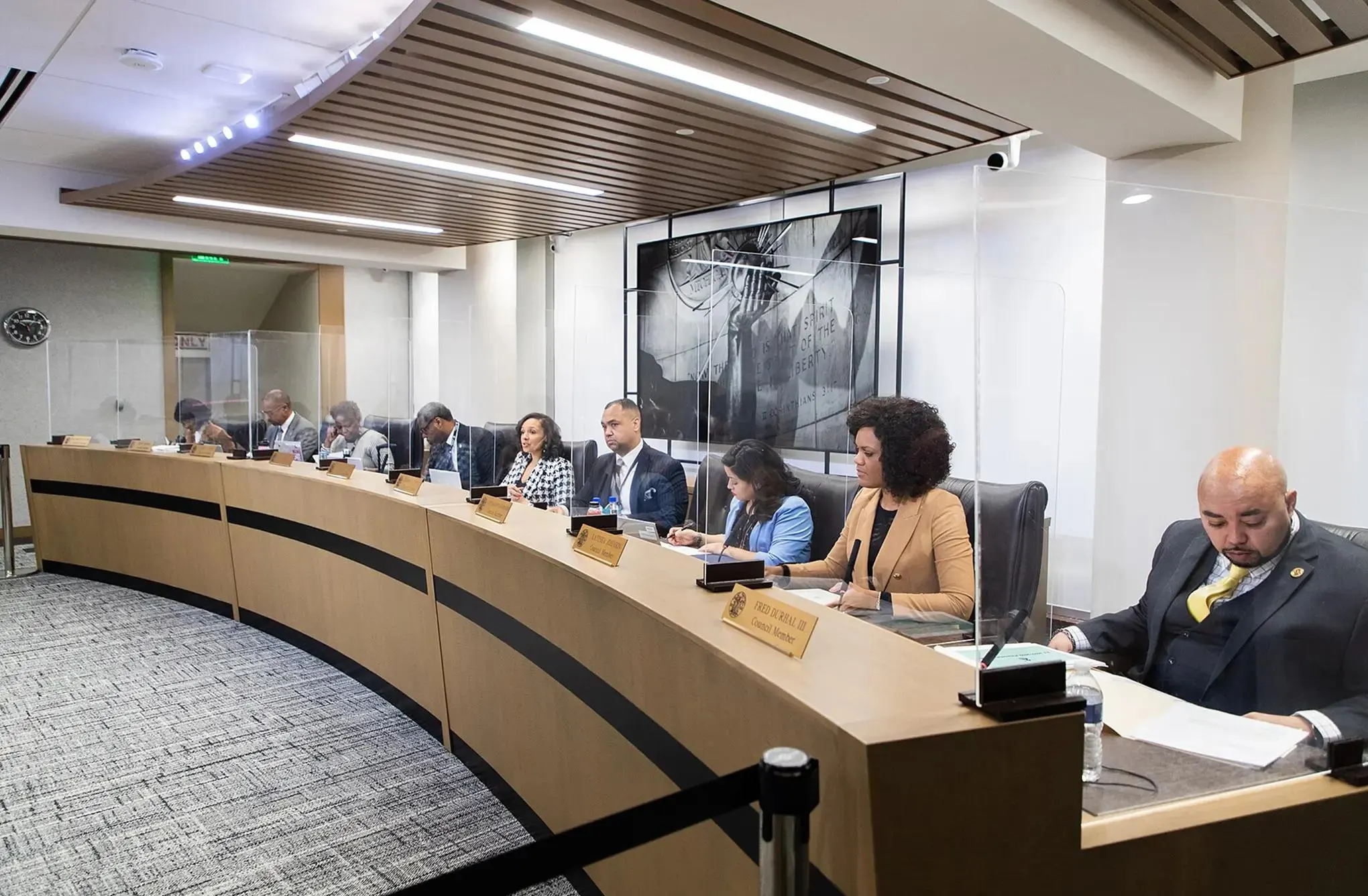
Cities and Home Rule Authority
Most Michigan municipalities are "home rule" cities with locally adopted charters giving them broad authority to address local concerns. Only 7 general law cities remain (Beaverton, Harrisville, Omer, Rose City, Sandusky, Whittemore, Yale).
City councils have "police powers" to regulate for public health, safety, and welfare under Michigan Constitution Article VII. Home rule cities can enact "any ordinance or charter provision deemed necessary for the public interest" as long as not contrary to state law.
City government structures:
- Council-manager form (175+ cities): Elected council sets policy, hired city manager implements it. Your advocacy targets are council members, not the manager.
- Strong-mayor systems (larger cities): Mayor has veto power and appoints key officials. You need to engage both council and mayor's office.
- Councils typically meet bi-weekly or monthly with agendas posted in advance
- Final passage requires majority of members elected and serving
What cities can regulate:
- Zoning and land use (strong local authority)
- Environmental regulations exceeding state minimums
- Building codes
- Business licensing
- Noise ordinances
- Public health measures
- Budget allocation including police department priorities
The catch: state preemption trumps home rule. While Michigan grants cities broad authority, the legislature retains plenary control and can (and does) preempt local ordinances in specific areas.
Counties: Limited Policy Authority
Counties have less policy-making authority than cities. They primarily provide services: courts, prosecutor, sheriff, public health, parks, elections, property records, and social services.
County commissions:
- Meet monthly or bi-monthly
- Follow Open Meetings Act requirements
- Pass measures by majority of members elected and serving
- Focus on fiscal matters (budget, taxes, appropriations) and oversight
For most policy advocacy, focus on cities rather than counties unless your issue specifically relates to county services (sheriff, prosecutor, courts, parks) or affects unincorporated township areas.
Counties cannot generally:
- Regulate tobacco sales
- Set minimum wages
- Enact broad public health ordinances without specific state authorization
- Exercise the same "police powers" as home rule cities
State Preemption: Know the Boundaries
Michigan courts recognize two types of preemption that can invalidate local laws:
Field preemption: State has occupied the entire regulatory field Conflict preemption: Local ordinance directly conflicts with state law
Completely preempted areas (don't waste resources here):
- Firearms regulation (MCL 123.1102): Local units cannot regulate ownership, registration, purchase, sale, transfer, transportation, or possession of firearms. Courts consistently strike down local gun ordinances. Only narrow exceptions for criminal conduct, workplace rules, discharge restrictions, and youth pneumatic guns.
- Minimum wage and labor standards (PA 105 of 2015, "Death Star Bill"): Local governments cannot enact ordinances governing minimum wage above state levels, paid leave/sick leave, union organizing, wage disputes, "ban the box" policies, or fair scheduling.
- Sanctuary city policies (legal gray area): Currently no state prohibition, but 2024-2025 legislation would ban sanctuary policies and withhold revenue sharing. If pursuing this, proceed with strong legal counsel.
Areas where local authority generally survives:
- Zoning and land use (strong local authority)
- Environmental regulations exceeding state minimums (case-by-case)
- Building codes
- Business licensing
- Noise ordinances
- Public health measures not comprehensively covered by state law
Before pursuing potentially preempted ordinances:
- Obtain formal opinion from municipal attorney
- Review Attorney General opinions and court decisions
- Research similar jurisdictions' experiences
- Draft narrowly to minimize conflict
- Build factual record justifying local need
- Be prepared for aggressive litigation from well-funded interest groups
Working with City Councils: Your Primary Local Partner

For most grassroots advocacy in Michigan, city councils are your most accessible and powerful partner. Here's how to engage effectively.
Understanding Council Dynamics
Attend meetings regularly before you need something. Building relationships during non-crisis times pays dividends when you're asking for support.
City council meetings follow strict procedures:
- Public notice required (18 hours for special meetings)
- Held in accessible public locations
- Must allow public comment under rules established by council
- All decisions made in open session (except narrow exceptions)
- You have explicit right to record meetings
Public comment rights:
- Councils can establish when comment occurs, individual time limits, and sign-up procedures
- They cannot deny the right to comment entirely
- No residency requirements or ID required for attendance (though may request from speakers)
- The public has no right to address bodies during deliberations on particular matters—only during designated public comment periods
Know the difference:
- Ordinances: Permanent laws, require two readings at separate meetings, harder to pass
- Resolutions: Administrative actions, policy statements, one vote, easier to pass
Effective Advocacy Strategies for Council Meetings
Do your homework:
- Read the agenda and background materials posted in advance
- Understand the specific proposal and how it relates to your goals
- Know which council members are likely supporters, opponents, and swing votes
- Identify any organized opposition and their arguments
Prepare your testimony:
- Write out 2-3 minute remarks (councils often have time limits)
- Lead with your specific ask: "I'm asking you to vote YES on Resolution X"
- Combine personal story with concrete facts
- Keep language respectful and avoid inflammatory rhetoric
- Submit written testimony even if you speak
Bring community members:
- Numbers matter—a room full of supporters signals broad community backing
- Diverse voices (age, race, profession, neighborhood) demonstrate widespread support
- Coordinate so speakers don't repeat each other's points
- Consider having different people speak to different aspects
Focus on local impact:
- How does this affect your specific community?
- What are the costs of inaction?
- What are concrete, achievable benefits?
- Use local examples and data
Build relationships with individual council members:
- Request individual meetings during off-session times
- Learn about their priorities and concerns
- Find common ground even with those who might oppose you
- Keep them informed of developments between meetings
Follow up after meetings:
- Thank supporters publicly and privately
- Provide additional information requested during meeting
- Continue building relationships regardless of vote outcome
- If you lose, understand why and adjust strategy
The Power of Budget Resolutions
Cities control their own budgets—this is a powerful tool that doesn't require changing higher-level laws.
Budget resolutions can:
- Defund specific enforcement activities
- Reallocate resources toward community priorities
- Make certain enforcement "lowest priority" for police
- Direct staff time toward alternative approaches
Example language from successful resolutions:
- "Investigation and arrest of individuals involved with [specific activities] shall be amongst the lowest priority for the City"
- "No City funds shall be used to assist in enforcement of laws imposing criminal penalties for [specific activities]"
- "City staff shall deprioritize enforcement of [specific regulations] in favor of [alternative approach]"
This approach works because:
- Budget allocation is clearly within local jurisdiction
- It achieves practical decriminalization without challenging federal/state law
- It's harder to challenge legally than attempts to "legalize" prohibited activities
- It reflects community values about resource allocation
Your Advocacy Roadmap
Here's how to put these principles into action:
Step 1: Choose Your Target Based on Jurisdiction
Start local when:
- Issue falls under home rule authority (zoning, environmental regulations, public health, business licensing, building codes)
- You want to make enforcement a low priority
- You can reallocate budget resources
- State preemption doesn't apply
Go to state legislature when:
- State law preempts local action (firearms, minimum wage, labor standards)
- You need statewide policy change
- Multiple localities face same issue
- You have resources for sustained advocacy
Use ballot initiatives when:
- Legislators are unresponsive despite public support
- You have broad community backing (confirmed by polling)
- You can mobilize volunteers and raise significant funds
- You want constitutional protection against legislative rollback
Step 2: Understand What's Legally Possible
Before launching a campaign:
- Determine if issue involves federal, state, or local jurisdiction
- Research state preemption in your policy area
- Consult municipal attorney if pursuing ordinances
- Review Attorney General opinions and court decisions
- Study what similar jurisdictions have done
For federally controlled matters:
- Use resolutions to express community values
- Focus on local enforcement priorities
- Leverage budget allocation authority
- Deprioritize and defund enforcement
- Don't attempt to "legalize" what federal law prohibits
Step 3: Build Your Coalition
Successful Michigan campaigns include:
- Faith communities (bridge partisan divides)
- Business leaders (economic credibility)
- Labor unions (political infrastructure)
- Academic experts (data and authority)
- Directly affected people (human impact)
- Former elected officials (political credibility)
Coalition best practices:
- Regular coordination meetings
- Shared messaging calendar and toolkits
- Respect organizational independence
- Different messengers for different audiences
- Clear division of labor
Step 4: Develop Your Message
Effective Michigan messaging combines:
- Personal stories: Real people from the community
- Local impact: Specific effects on your city/district
- Economic data: Concrete numbers and evidence
- Bipartisan framing: Appeal across political spectrum
- Values-based language: Connect to shared principles
Avoid:
- National talking points without local application
- Inflammatory or divisive language
- Pure ideology without practical benefits
- Dismissing legitimate concerns
Step 5: Engage Decision-Makers
For city councils:
- Attend meetings regularly before you need something
- Request individual meetings with council members
- Bring community members to show broad support
- Prepare 2-3 minute testimony with written backup
- Focus on specific asks
- Follow up after meetings
For state legislators:
- Schedule district office meetings
- Testify at committee hearings (most effective)
- Send physical letters (more impactful than email)
- Coordinate constituent communications
- Build relationships during off-session months
- Contact legislators at each stage of bill process
For both:
- Know your audience's priorities and concerns
- Provide solutions, not just problems
- Be respectful even when opposed
- Build relationships as long-term investment
- Listen to concerns and respond substantively
Step 6: Use Media Strategically
Media multiplies your impact:
- Editorial boards for policy endorsements
- Op-eds with diverse co-authors
- Letters to editor from constituents
- Press releases at key campaign moments
- Social media for grassroots mobilization
- Regional considerations (Detroit requires aggressive outreach; smaller markets more accessible)
Validator strategy:
- Former elected officials (high credibility)
- Academic experts (authority)
- Business leaders (economic arguments)
- Faith leaders (bridge divides)
- Affected community members (human impact)
Step 7: Leverage Transparency Laws
Use Open Meetings Act:
- Attend and demand public comment time
- Record proceedings
- Document violations
- Challenge within 60 days if needed
Use FOIA strategically:
- Expose problems
- Gather campaign data
- Understand opposition arguments
- Track decision-making processes
- Document patterns
Step 8: Plan for the Long Term
Long-term organizing includes:
- Building relationships during non-crisis times
- Establishing coalition infrastructure
- Creating foundation of support before major push
- Multiple tactics (education, mobilization, lobbying, media)
- Sustained presence and engagement
- Willingness to adjust tactics based on response
Final Thoughts: Power, Law, and Strategic Advocacy
The Decriminalize Nature movement teaches an important lesson about the relationship between law and power. As their national guide notes: "There is a difference between Law and Power."
Cannabis remains on the federal Schedule I list, yet many states have enacted legalization laws. Why doesn't the federal government enforce? Power. When enough jurisdictions enact policy, when enough communities demonstrate their values, when enough people mobilize—power shifts even without law changing.
Your advocacy in Michigan—whether pursuing resolutions, ordinances, legislative change, or ballot initiatives—is ultimately about building power:
- The power of numbers: Community members filling council chambers
- The power of stories: Personal testimonies that change minds
- The power of evidence: Data that makes the case irrefutable
- The power of coalitions: Diverse allies who amplify your voice
- The power of persistence: Sustained organizing that wears down opposition
- The power of strategy: Smart use of available tools and processes
Michigan gives you powerful tools: accessible ballot initiatives, home rule authority for cities, transparent government processes, and a political culture that responds to bipartisan coalition-building.
Use them strategically. Build power thoughtfully. And remember that meaningful change comes from sustained organizing, not single actions.
Successful movements grow by cultivating leaders across different communities and regions. As Decriminalize Nature's philosophy emphasizes, decentralized organizing empowers local groups to build collective momentum, strengthening the entire movement.
Go forth and organize. Build your coalition. Engage your elected officials. Use the tools Michigan provides. And remember: you have an unalienable right to advocate for the kind of community you want to live in.
Now get to work.
This guide was created by synthesizing insights from Decriminalize Nature's national organizers' guide with Michigan's specific governmental structures, processes, and successful campaign strategies from 2015-2025.